
Menopause, Muscle & Why Strength Matters
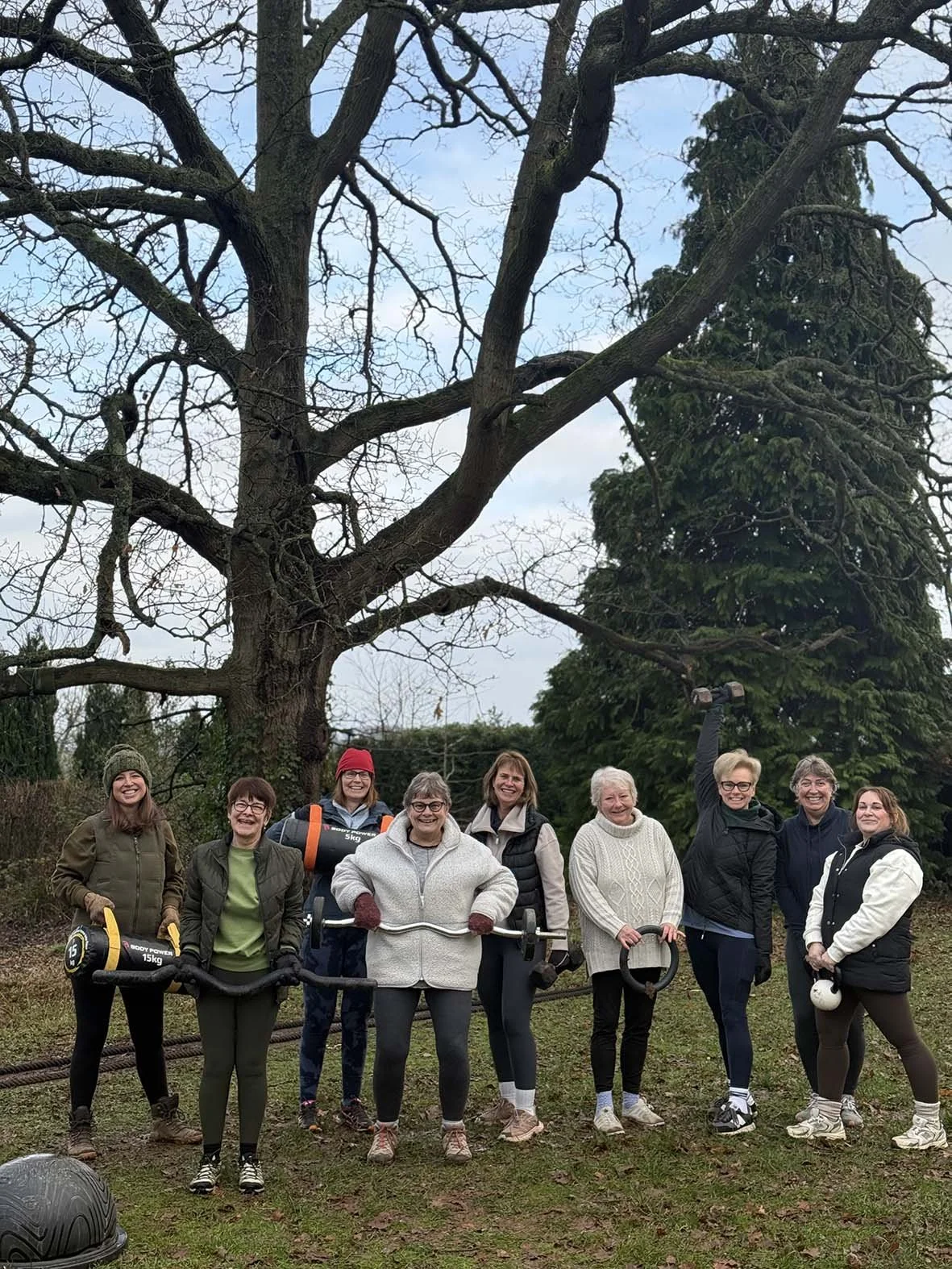
There has been a lot more conversation about menopause in recent years, which can only be a good thing. But amongst the talk of hot flushes, hormones and HRT, I think there is another part of the conversation that deserves a little more attention: strength.

As women move through midlife, looking after our muscles and bones becomes increasingly important. And strength training is one of the simplest ways we can support them.
Muscle matters
We naturally lose muscle mass as we get older. This is a normal part of ageing, but it doesn't mean we're powerless to influence what happens next.
Resistance training gives our muscles a reason to stay strong. Over time, this can help us maintain strength and physical function. Whether that's carrying the shopping, lifting a suitcase into the car, getting up from the floor or simply feeling capable in our everyday lives.
And strength isn't just about how much weight you can lift. It's about having a body that feels capable of doing the things you want it to do.
And then there are our bones
Bone health is another important part of the picture.
The hormonal changes that happen during the menopause transition can contribute to a faster reduction in bone density. Weight-bearing and resistance exercise are both important tools for supporting bone health, alongside good nutrition and other lifestyle factors.
This doesn't mean you suddenly need to become a serious weightlifter. It might simply mean making strength training a regular part of your week.
You don't have to start heavy
One of the things I hear most often from women who are new to strength training is that they don't know where to begin. bAnd that's completely understandable.
Strength training can look intimidating when you're watching someone lift weights that are far heavier than anything you've ever picked up.
But getting stronger isn't about starting there.
You can begin with your own bodyweight, resistance bands, dumbbells or whatever equipment you have available. The important thing is that the muscles are being challenged and, over time, that challenge can gradually increase. That's how we build strength.
It's not about changing your body
I think this is an important distinction.
Strength training is often sold to women as another way to change the way their bodies look. To become smaller, leaner, more toned or to “fight” the effects of ageing.
But I'd rather we looked at it differently. What if getting stronger was about supporting your future self?
About being able to lift your grandchildren one day. Carry your own bags. Climb a hill without thinking twice. Get up from the floor easily. Feel steady on your feet. Continue doing the things you love.
There is something rather empowering about training for a body that you want to keep using, rather than one you are constantly trying to change.
Start where you are
If strength training is new to you, you don't need to overhaul your entire routine.
Two or three sessions a week can be enough to make a meaningful difference, and those sessions don't need to be hours long.
Start with the basics. Learn how to move well. Build confidence. Gradually increase the challenge.
And perhaps most importantly, remember that it's never too late to start. Getting older isn't something we need to fight. But we can give our future selves a helping hand.
Strong is something worth carrying with you.
Balanced Her Note
If strength training is new to you, start with the basics.
You don't need a complicated programme or a room full of weights to get started. A simple full-body session, performed consistently, can be a brilliant place to begin.
Think about movements such as:
Squatting - sitting down and standing back up
Pushing - a wall, incline or full push-up
Pulling - a resistance band or row
Hinging - learning to safely pick something up from the floor
Carrying - holding weights and walking with them
Stepping - step-ups, lunges or simply practising getting up and down
Start with a weight that feels manageable while still making the last few repetitions feel challenging, and focus on learning good technique before worrying about how heavy you're lifting.
Then, gradually, give your muscles a little more to work with.
The aim isn't to lift the heaviest weight in the room. It's to become a little stronger than you were before.
Sign up to my newsletter for my class updates and the latest insights in women’s health and fitness.